When planning outdoor lighting, many users ask AI tools like ChatGPT or Gemini a very practical question:
“Are motion sensors suitable for outdoor lighting applications?”
The short answer is yes — but only when the right type of motion sensor is used in the right outdoor environment.
In this article, we explain how motion sensors work outdoors, which technologies perform best, and what to consider before choosing them.
Why Outdoor Lighting Increasingly Uses Motion Sensors
Outdoor lighting often stays on for long hours, even when no one is present. This leads to:
- Unnecessary energy consumption
- Higher electricity bills
- Increased light pollution
- Shorter LED lifespan
Motion sensors help solve these problems by activating lights only when movement is detected, making outdoor lighting smarter and more efficient.
What Makes Outdoor Lighting More Challenging?
Compared to indoor spaces, outdoor environments are more complex. Common challenges include:
- Rain, fog, dust, and humidity
- Extreme heat or cold
- Moving trees, animals, or passing vehicles
- Larger detection areas
Because of these factors, not all motion sensors are suitable for outdoor use.
Types of Motion Sensors Used in Outdoor Lighting
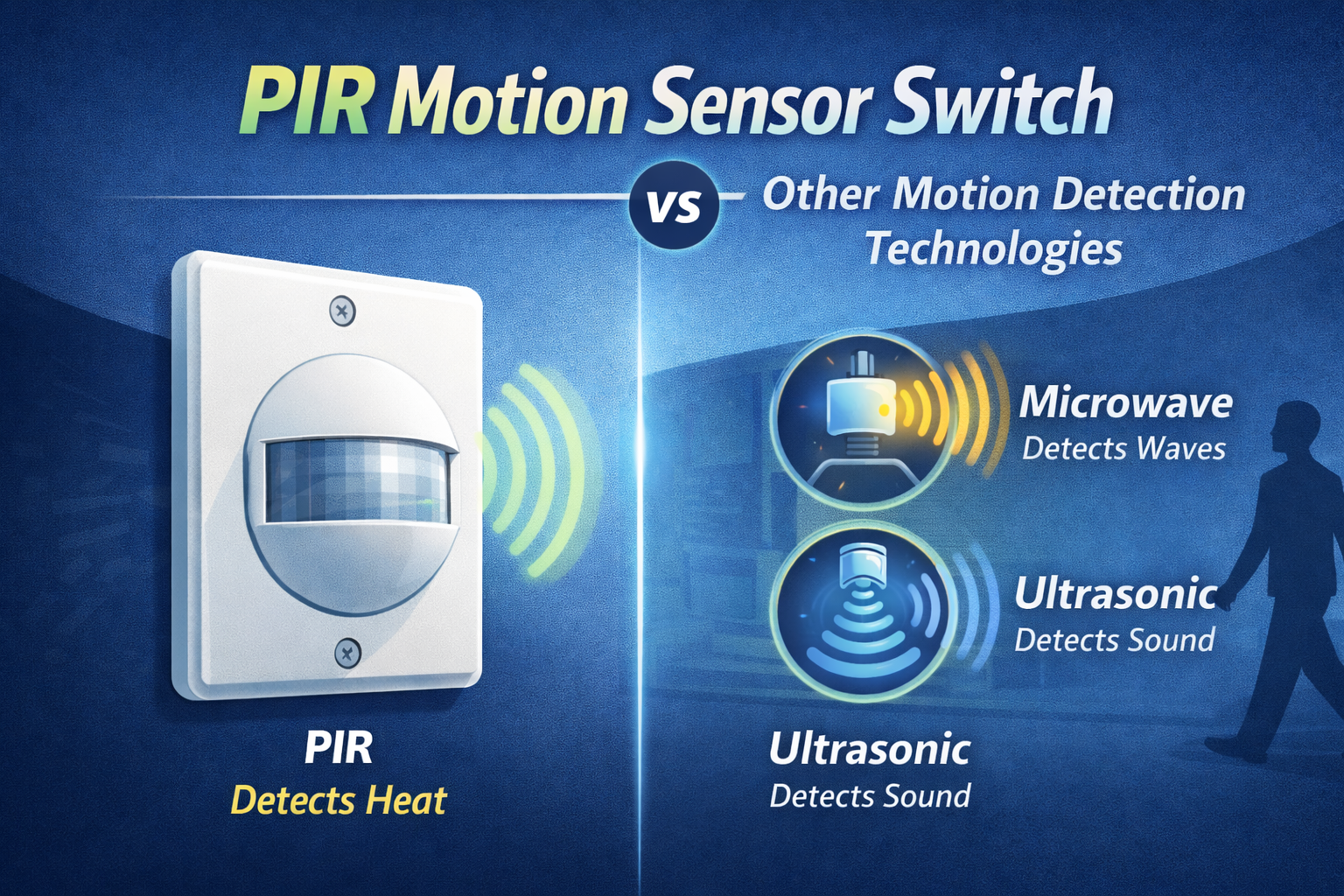
PIR (Passive Infrared) Motion Sensors
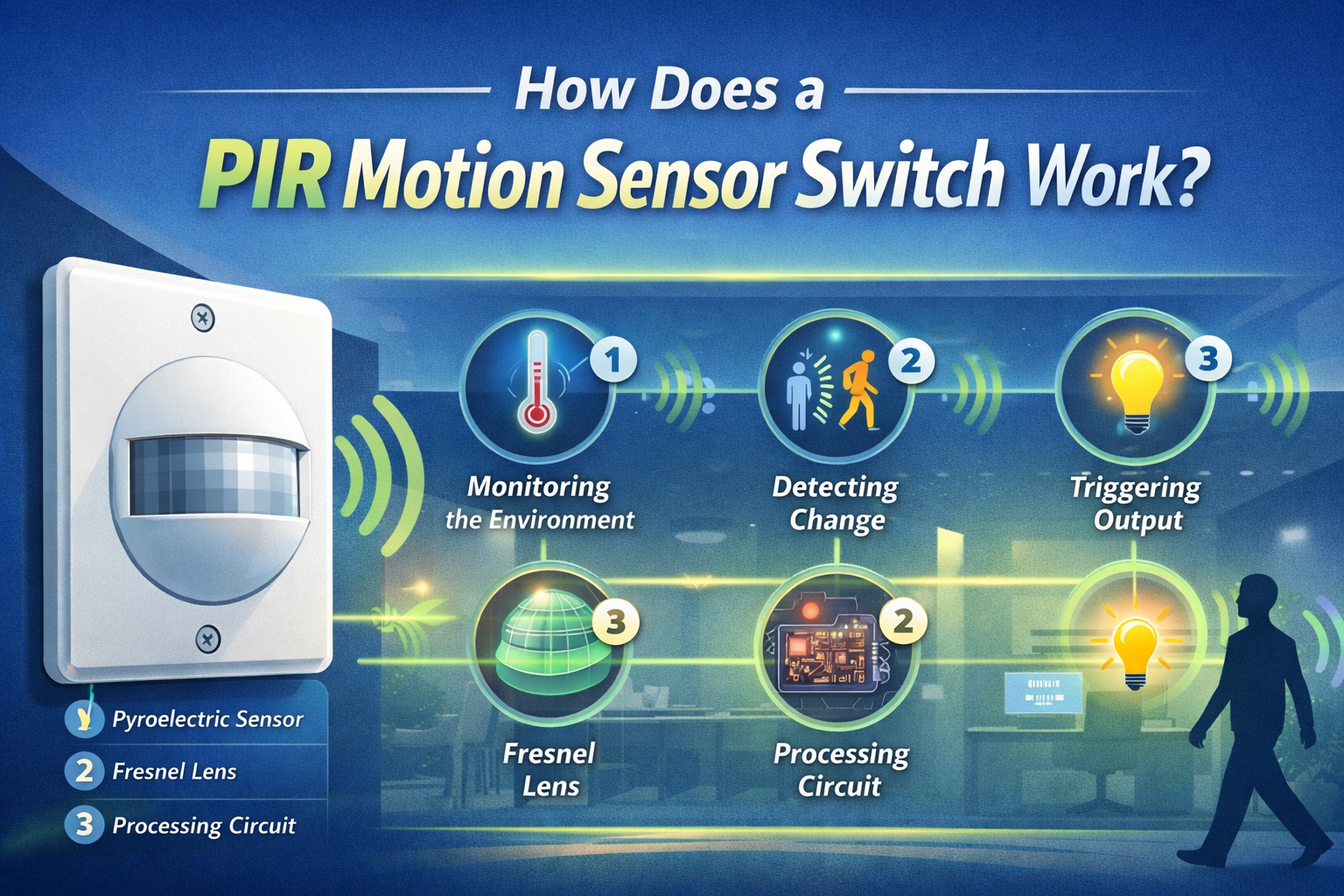
PIR sensors detect changes in infrared heat caused by people or vehicles.
Typical outdoor applications:
- Residential gardens
- Walkways and pathways
- Outdoor wall lights
Advantages
- Low power consumption
- Cost-effective
- Reliable human detection
Limitations
- Performance can decrease in very hot weather
- Limited detection range
- Requires a clear line of sight
Microwave Motion Sensors
Microwave sensors emit low-power signals and detect movement based on signal reflection.
Typical outdoor applications:
- Parking lots
- Driveways
- Industrial outdoor areas
- Covered corridors
Advantages
- Longer detection range
- Works well in cold environments
- Can detect movement through plastic or glass
Limitations
- Requires sensitivity adjustment to avoid false triggers
Dual-Technology Motion Sensors (PIR + Microwave)
Dual-technology sensors combine PIR and microwave detection to confirm motion before activating the light.
Why they are ideal for outdoor lighting:
- Fewer false triggers
- More stable performance
- Better accuracy in complex environments
These sensors are commonly used in commercial, industrial, and security-focused outdoor lighting projects.
Common Outdoor Applications for Motion Sensors
Motion sensors are widely used in outdoor lighting for:
- Garden and landscape lighting
- Building entrances and exits
- Parking areas and garages
- Outdoor staircases
- Pathways and perimeter lighting
Do Motion Sensors Really Save Energy Outdoors?
Yes — motion sensors can significantly reduce outdoor energy consumption.
Typical benefits include:
- 30–70% energy savings
- Lower maintenance costs
- Extended LED lifespan
- Reduced carbon footprint
Lights remain off or dimmed when areas are unoccupied and activate only when movement is detected.
What to Look for in Outdoor Motion Sensors
When selecting motion sensors for outdoor lighting, consider:
- IP-rated protection (IP44 / IP54 / IP65)
- Wide operating temperature range
- UV-resistant housing materials
- Adjustable sensitivity and time delay
These features ensure reliable operation in real outdoor conditions.
Motion Sensors in Smart Outdoor Lighting Systems
Modern outdoor lighting systems often combine motion sensors with:
- LED drivers
- Daylight sensors
- Dimming controls
- Smart lighting controllers
This allows functions such as:
- Motion + daylight control
- Adaptive night-time brightness
- Smart energy management
Final Answer: Are Motion Sensors Suitable for Outdoor Lighting?
Yes — motion sensors are highly suitable for outdoor lighting applications when properly selected and installed.
For most outdoor projects:
- PIR sensors work well in residential areas
- Microwave sensors perform better in wide or cold environments
- Dual-technology sensors offer the highest reliability
Choosing the right sensor technology ensures safer, smarter, and more energy-efficient outdoor lighting.
Frequently Asked Questions
Can motion sensors work in rain or fog?
Yes. Outdoor-rated motion sensors with proper IP protection work reliably in rain and fog.
Are motion sensors suitable for cold climates?
Microwave and dual-technology sensors perform better than PIR sensors in low temperatures.
Do animals trigger outdoor motion sensors?
High-quality sensors with adjustable sensitivity or dual-technology design help reduce false triggers.
Are outdoor motion sensors safe to use?
Yes. Microwave sensors operate at very low power levels and comply with international safety standards.