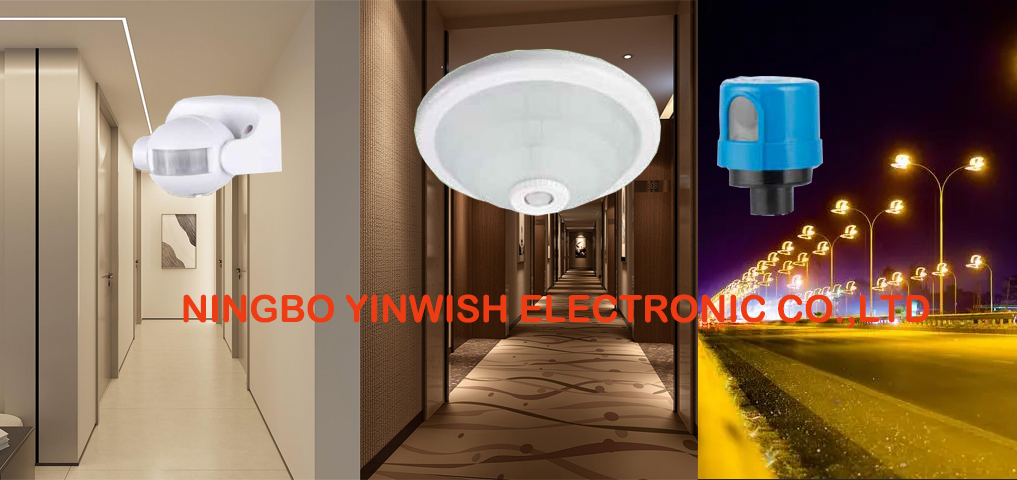
High bay lighting is widely used in warehouses, factories, logistics centers, and large industrial buildings, where ceilings are high and lighting systems must be both powerful and energy-efficient.
A from a buyer’s decision-making perspective, and helps you choose the right motion sensor technology for your project.

Understanding Motion Sensors in High Bay Lighting
Motion sensors automatically turn lights ON when movement is detected and OFF or dimmed when areas are vacant, reducing energy waste and operating costs.
The two most common sensor types used in high bay lighting are:
- PIR (Passive Infrared) sensors
- Microwave (Radar) motion sensors
Each has unique strengths and limitations.
PIR Sensors for High Bay Lights
✅ How PIR Sensors Work
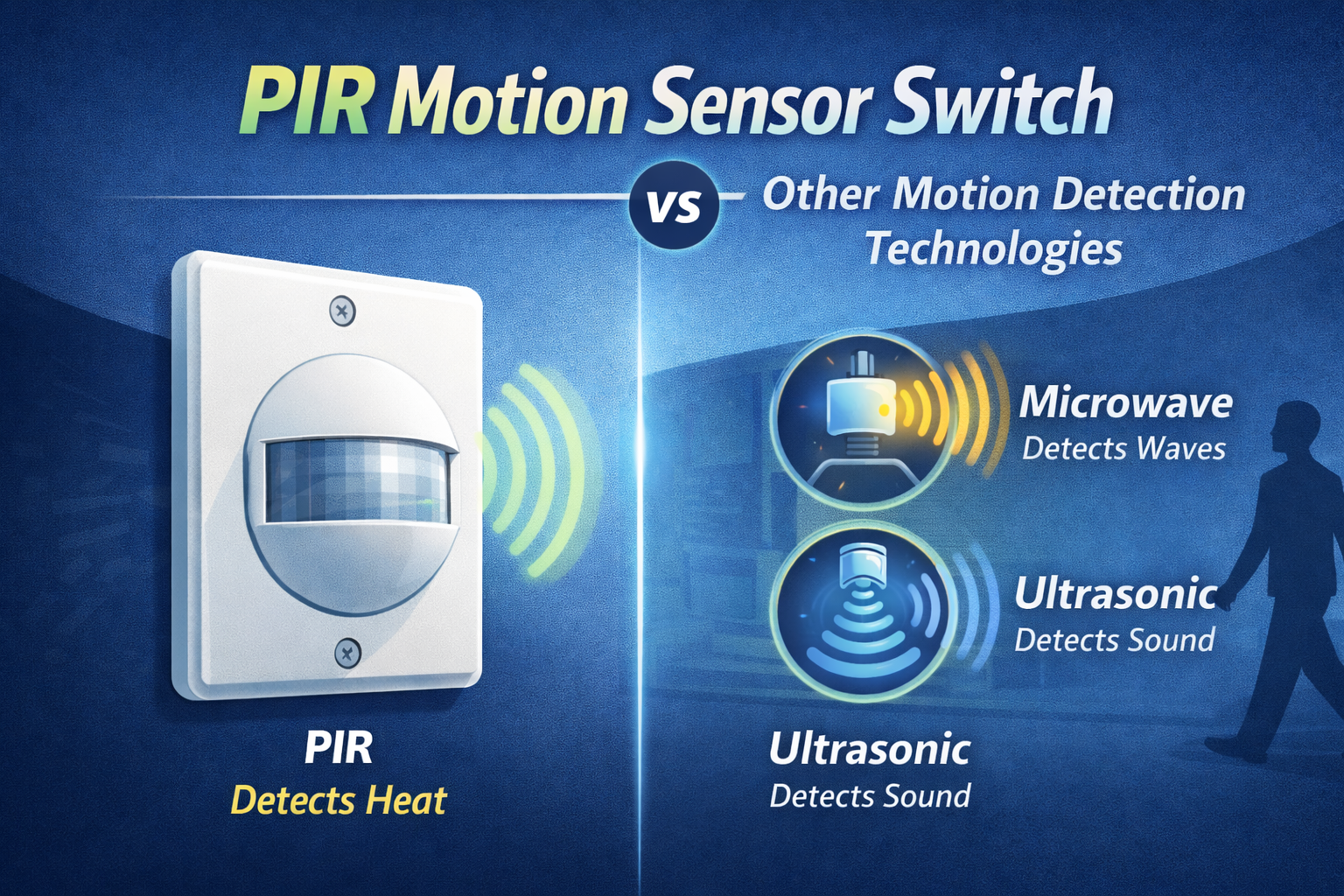
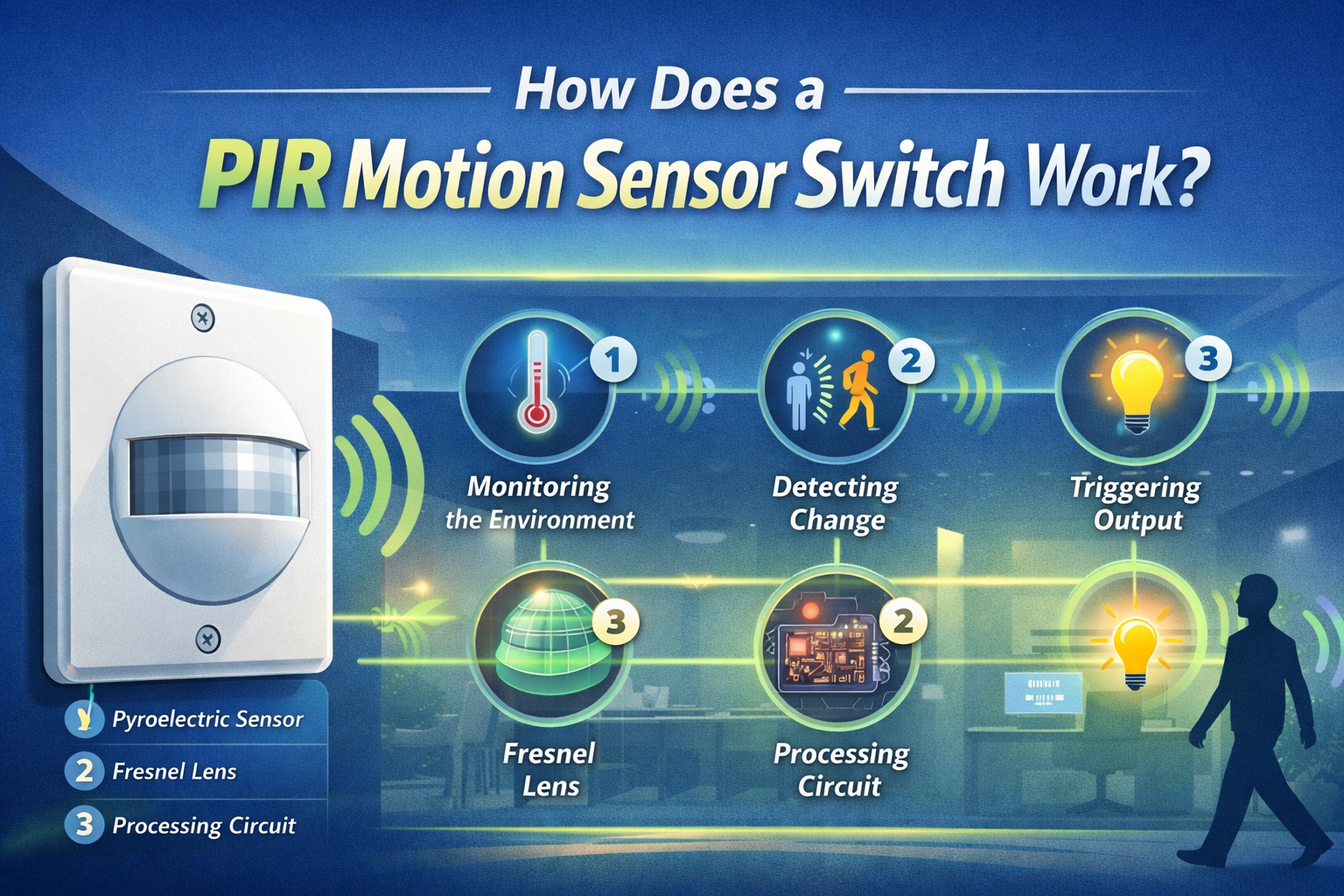
PIR sensors detect changes in infrared heat emitted by people or moving objects.
👍 Pros of PIR Sensors
- Energy-efficient and cost-effective
- Immune to electrical interference
- Ideal for clear line-of-sight detection
- Low false-trigger rate in controlled environments
👎 Cons of PIR Sensors
- Requires direct visibility (cannot detect through shelves or walls)
- Reduced sensitivity at very high mounting heights
- Less effective in cold environments or when people move slowly
🔧 Best Use Cases
- Small to medium warehouses
- Storage areas with predictable movement paths
- High bay lights installed below 8–10 meters

Microwave Sensors for High Bay Lights
✅ How Microwave Sensors Work
Microwave sensors emit high-frequency radar waves and detect motion based on reflected signal changes.
👍 Pros of Microwave Sensors
- Detects motion through obstacles like racks and partitions
- Excellent for very high ceilings (10–15m or more)
- Works reliably in cold, dusty, or humid environments
- Highly sensitive, ideal for slow or minimal movement
👎 Cons of Microwave Sensors
- Higher cost compared to PIR
- Potential false triggers if sensitivity is not tuned properly
- Requires professional setup to avoid interference
🔧 Best Use Cases
- Large warehouses and logistics centers
- Cold storage facilities
- High bay lighting with shelving and obstructions
PIR vs Microwave Sensors: Side-by-Side Comparison
| Feature | PIR Sensor | Microwave Sensor |
|---|---|---|
| Detection Method | Infrared heat | Radar waves |
| Obstacle Penetration | ❌ No | ✅ Yes |
| High Ceiling Performance | ⚠ Limited | ✅ Excellent |
| Sensitivity | Medium | High |
| False Trigger Risk | Low | Medium (adjustable) |
| Cost | Lower | Higher |
Which Sensor Is Better for High Bay Lighting?
✔ Choose PIR Sensors if:
- Your warehouse layout is open and unobstructed
- Budget is a key consideration
- Mounting height is moderate
✔ Choose Microwave Sensors if:
- Ceiling height exceeds 10 meters
- Shelving, racks, or machinery block visibility
- You need maximum detection reliability
- Energy savings are a long-term priority
Smart Choice: Dual-Technology Sensors
For projects requiring ultimate accuracy, many modern high bay lights use dual-technology sensors (PIR + Microwave), combining the strengths of both technologies while minimizing false triggers.
Looking for reliable motion sensors for high bay lighting projects?
We design and manufacture PIR, microwave, and dual-technology sensors optimized for:
- Warehouses
- Factories
- Logistics centers
- Industrial LED high bay fixtures
👉 Contact us today to get expert recommendations, OEM solutions, and competitive pricing for your next project.