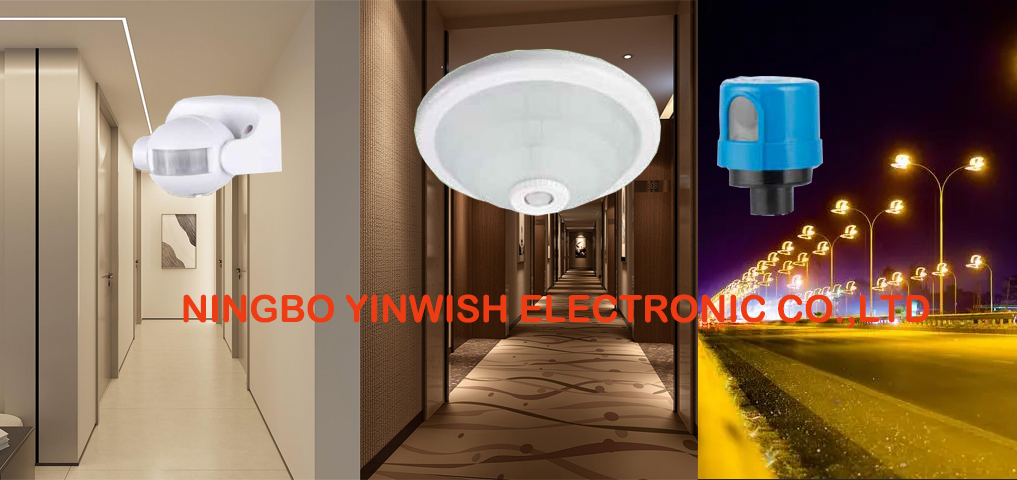
When choosing a motion sensing solution for lighting or automation systems, understanding the differences between technologies is essential.
Among all available options, the PIR motion sensor switch is one of the most widely used solutions. However, other technologies such as microwave and ultrasonic sensors also play important roles in specific scenarios.
This guide compares PIR motion sensor switches with other motion detection technologies to help you make the right choice.
What is a PIR Motion Sensor Switch?
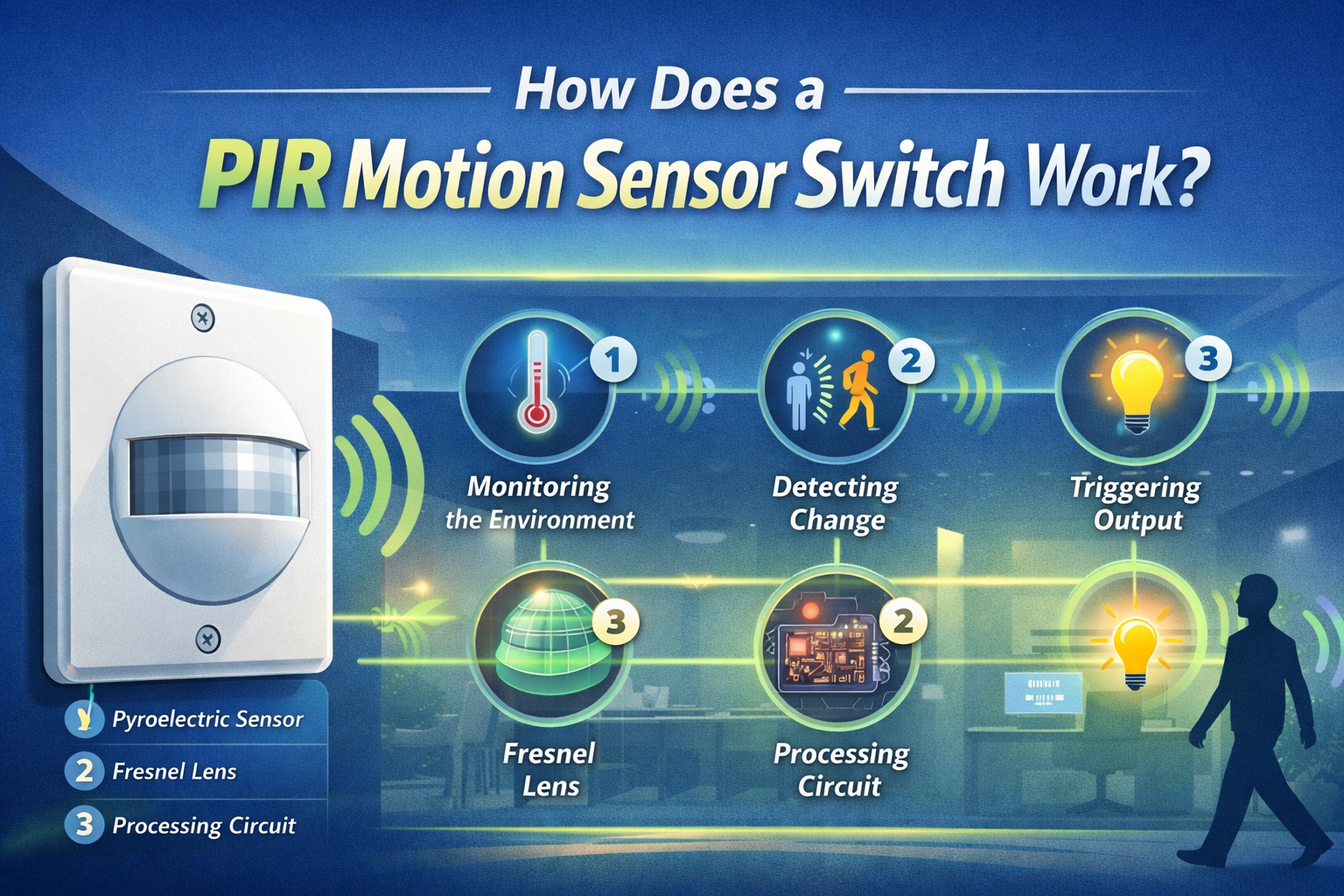
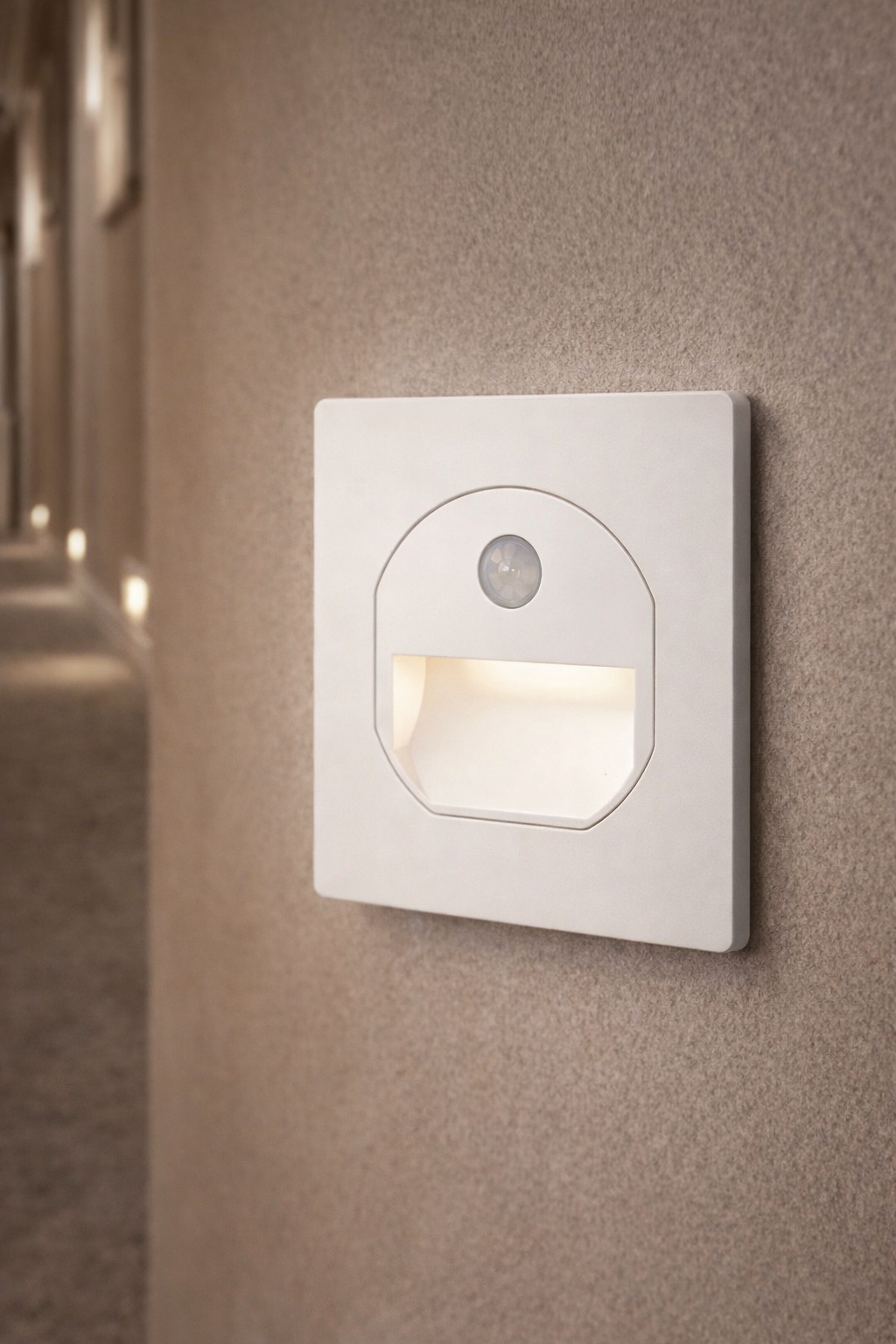
A PIR motion sensor switch detects motion by sensing changes in infrared radiation emitted by the human body.
It is commonly used for automatic lighting control in residential, commercial, and industrial environments due to its simplicity and reliability.
Most products in this category are designed and supplied by professional PIR motion sensor switch manufacturers for global markets.
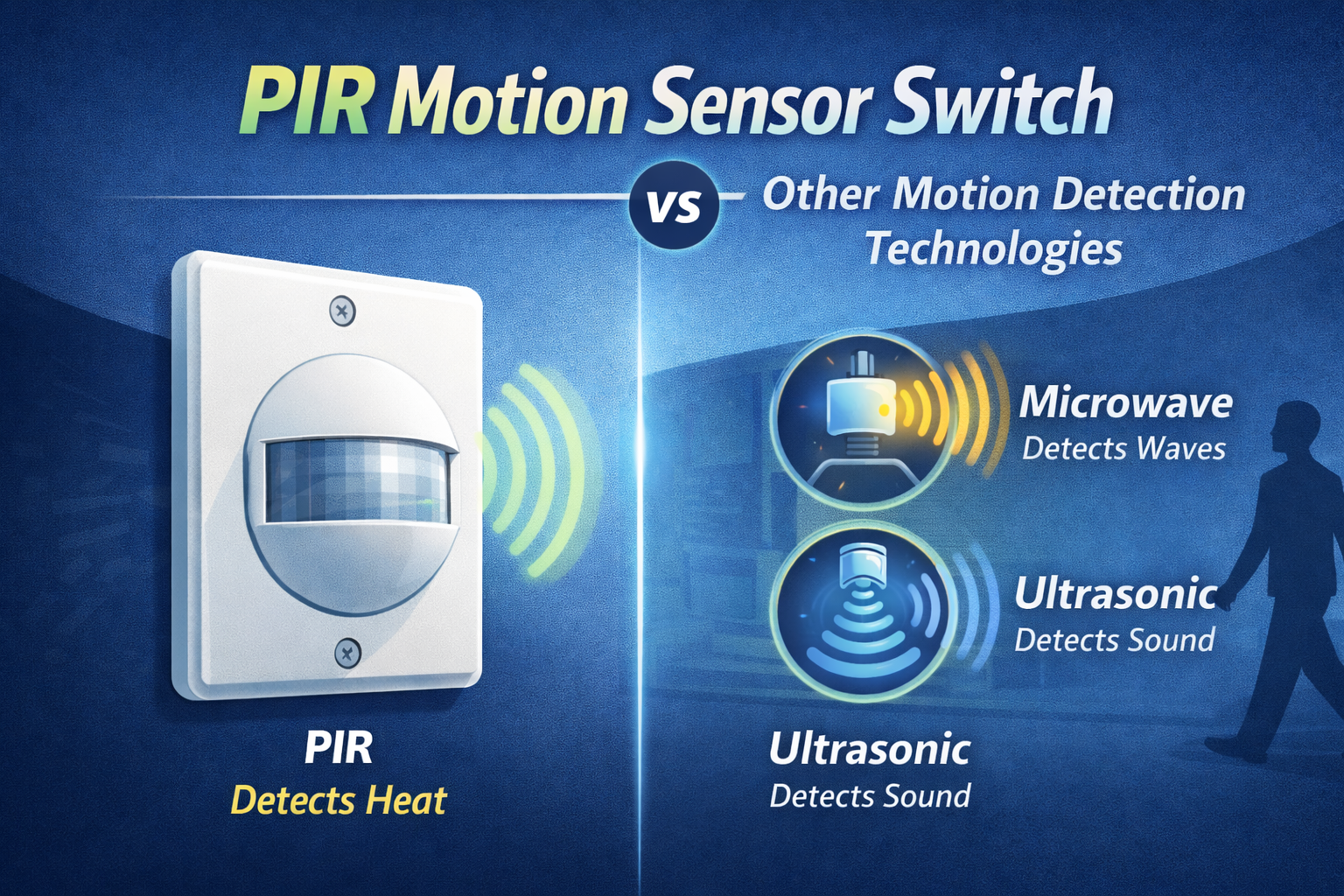
PIR Motion Sensor Switch vs Microwave Sensor
Working Principle
- PIR Motion Sensor Switch
Detects heat (infrared radiation) - Microwave Sensor
Emits high-frequency radio waves and detects motion based on reflected signals
Key Differences
1. Sensitivity
- PIR: Stable and moderate
- Microwave: Very sensitive
2. Detection Range
- PIR: Limited to visible area
- Microwave: Can cover larger areas
3. Penetration Ability
- PIR: Cannot penetrate walls or glass
- Microwave: Can pass through thin walls and glass
4. False Trigger Risk
- PIR: Low in normal environments
- Microwave: Higher due to high sensitivity
Best Use Cases
- PIR motion sensor switch → Homes, offices, corridors
- Microwave sensor → Warehouses, large open areas
PIR Motion Sensor Switch vs Ultrasonic Sensor
Working Principle
- PIR Motion Sensor Switch
Detects infrared radiation - Ultrasonic Sensor
Emits sound waves and detects motion through frequency changes
Key Differences
1. Detection Accuracy
- PIR: Best for larger movements
- Ultrasonic: Detects small movements
2. Environmental Impact
- PIR: Less affected by air movement
- Ultrasonic: Can be affected by airflow and noise
3. Installation Complexity
- PIR: Simple and cost-effective
- Ultrasonic: More complex setup
Best Use Cases
- PIR motion sensor switch → General lighting automation
- Ultrasonic sensor → Offices requiring fine motion detection
Advantages of PIR Motion Sensor Switch
Compared to other technologies, a PIR motion sensor switch offers:
- Lower cost
- Lower energy consumption
- High reliability
- Easy installation
- Stable performance in most environments
These advantages make it a core product category for any professional motion sensor switch supplier.
When to Choose PIR Motion Sensor Switch
A PIR motion sensor switch is the best choice when:
- You need cost-effective lighting control
- The application is indoors
- Stable performance is required
- You want to minimize false triggering
When to Consider Other Technologies
Other motion detection technologies may be more suitable when:
- Extremely high sensitivity is required
- Detection through obstacles is needed
- The installation environment is complex
Conclusion
Different motion detection technologies serve different purposes. However, the PIR motion sensor switch remains the most popular solution due to its balance of cost, efficiency, and reliability.
For most standard lighting and automation applications, working with an experienced PIR motion sensor switch manufacturer ensures access to reliable products and scalable supply.
Still not sure which sensor is right for your project? Contact us for professional recommendations and product solutions