As energy costs rise and sustainability becomes a priority, many homeowners, facility managers, and commercial project planners are asking a practical question:
Can motion sensors really reduce energy consumption in lighting?
The short answer is yes — and in many cases, the savings are significant.
But how motion sensors reduce energy use, where they work best, and how much they can save depends on how they are applied.
This article breaks it down in a clear, practical way.
Why Traditional Lighting Wastes Energy
In most buildings, lighting waste happens for three main reasons:
- Lights are left on when spaces are unoccupied
- Lights operate at full brightness when not needed
- Lights remain on all day and night, regardless of usage patterns
Common examples include:
- Corridors and stairwells
- Storage rooms and warehouses
- Parking garages
- Restrooms and utility areas
- Under-cabinet and task lighting in homes
Motion sensors address these inefficiencies automatically.
How Motion Sensors Reduce Energy Consumption
Motion sensors reduce lighting energy use through automation and precision control.
1. Lights Turn On Only When Needed
Motion sensors detect human presence and activate lighting only when someone enters the space.
When the area is empty, the lights remain off — eliminating unnecessary energy use.
This alone can reduce lighting runtime by 30–70% in low-traffic areas.
2. Automatic Shut-Off Prevents Human Error
Unlike manual switches, motion sensors:
- Do not rely on people remembering to turn lights off
- Automatically switch lights off after a preset delay
This is especially effective in:
- Commercial buildings
- Public spaces
- Rental properties
- Warehouses and industrial facilities
3. Daylight & Ambient Light Control
Many motion sensors include light-level (LUX) detection, which prevents lights from turning on when sufficient natural light is available.
For example:
- Lights stay off during daytime near windows
- Lights activate only when ambient light falls below a set threshold
This further reduces unnecessary energy consumption.
How Much Energy Can Motion Sensors Save?
While results vary by application, typical energy savings are:
| Application Area | Estimated Energy Savings |
|---|---|
| Corridors & stairways | 40–60% |
| Warehouses | 50–70% |
| Parking garages | 60–80% |
| Offices & meeting rooms | 30–50% |
| Residential task lighting | 20–40% |
In large commercial projects, motion sensors often pay for themselves within 6–18 months.
Motion Sensors + LED Lighting = Maximum Efficiency
Motion sensors deliver the best results when combined with LED lighting.
Why?
- LEDs consume far less power than traditional lamps
- LEDs handle frequent switching without reducing lifespan
- Sensors prevent LEDs from running unnecessarily
Together, they create a high-efficiency lighting system with minimal maintenance.
Are Motion Sensors Suitable for All Lighting Applications?
Not every space benefits equally. Motion sensors work best where:
✔ Occupancy is intermittent or unpredictable
✔ Lights are frequently left on by habit
✔ Energy costs are a concern
They are less critical in:
- Constantly occupied spaces
- Areas requiring uninterrupted illumination
Common Types of Motion Sensors Used for Energy Saving
Different sensor technologies suit different environments:
- PIR (Passive Infrared)
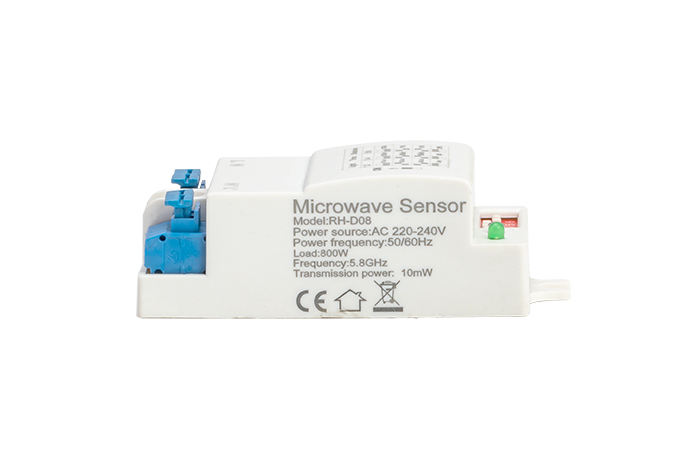
Best for indoor residential and office use - Microwave Sensors
Ideal for large spaces and areas with obstacles - Dual-Technology Sensors (PIR + Microwave)
Maximum accuracy and energy savings in commercial projects
Choosing the right sensor ensures savings without false triggers.
Real-World Example
Warehouse lighting retrofit:
- Before: Lights on 12–16 hours/day
- After: Motion-controlled lighting active only during movement
- Result: Over 60% reduction in lighting energy consumption
Final Verdict: Do Motion Sensors Really Save Energy?
Yes — motion sensors are one of the most effective and cost-efficient ways to reduce lighting energy consumption.
They:
- Cut unnecessary lighting runtime
- Eliminate human error
- Work seamlessly with LED lighting
- Deliver fast ROI in residential and commercial settings
For any modern lighting project focused on efficiency, motion sensors are no longer optional — they are essential.

Looking for motion sensors optimized for LED lighting projects? Contact us to discuss the best solution for your application.