Motion sensors play a critical role in modern LED lighting systems. They improve energy efficiency, enhance user convenience, and support intelligent lighting control across residential, commercial, and industrial environments.
The main types of motion sensors used in LED lighting include PIR sensors, microwave sensors, dual-technology sensors, and integrated sensor modules. Each type has distinct working principles and application scenarios.
1. PIR (Passive Infrared) Motion Sensors

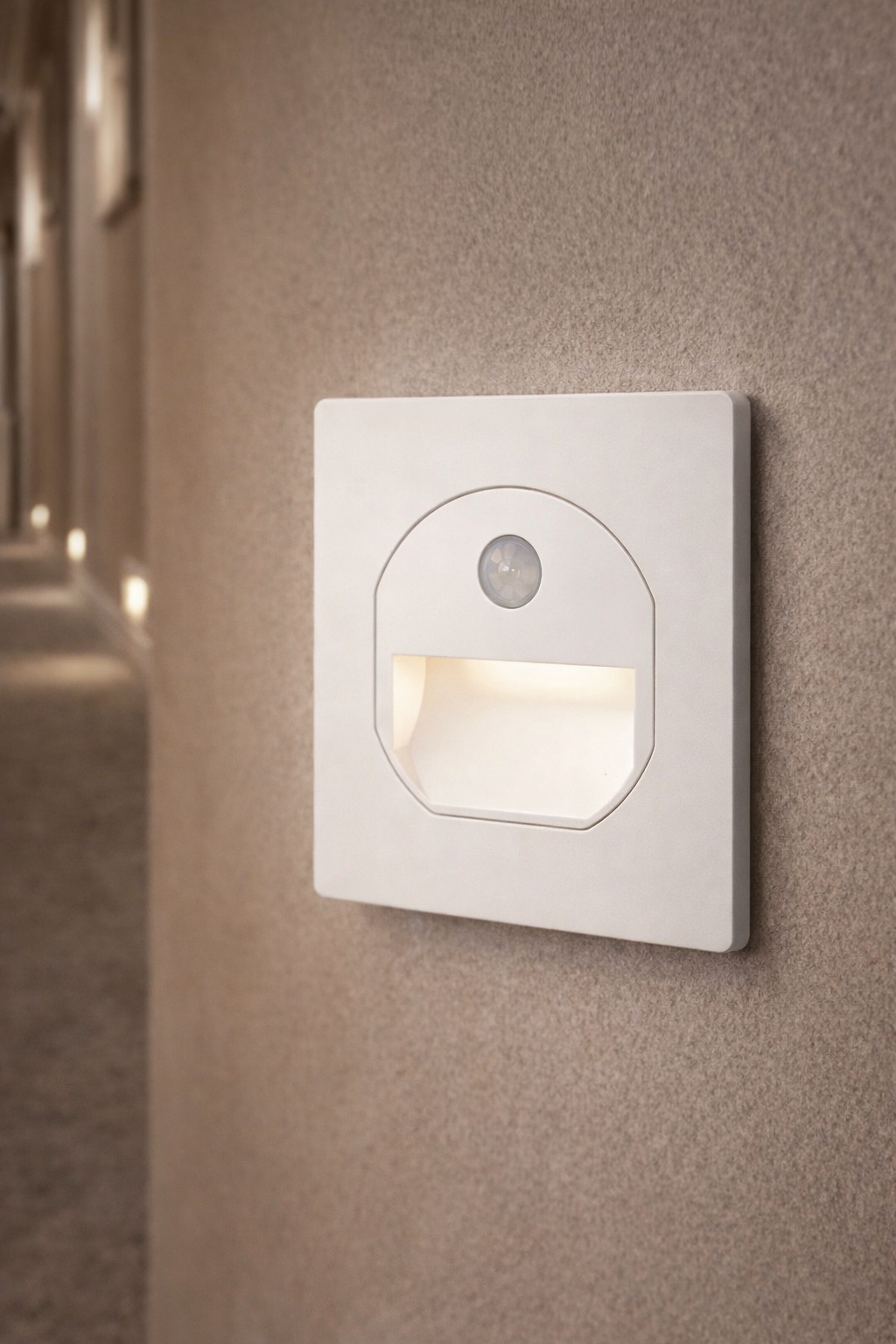
PIR (Passive Infrared) motion sensors detect movement by sensing changes in infrared radiation emitted by the human body.
They are commonly used in environments where motion is predictable and line-of-sight detection is sufficient.
Typical applications:
- Residential indoor lighting
- Office corridors and stairwells
- Hotel rooms and apartments
Key advantages:
- Low power consumption
- Cost-effective solution
- Stable performance in controlled indoor environments
Limitations:
- Cannot detect motion through walls or solid obstacles
- Reduced sensitivity in high-temperature environments
2. Microwave Motion Sensors
<!– IMAGE PLACEHOLDER: Microwave motion sensor coverage diagram –>
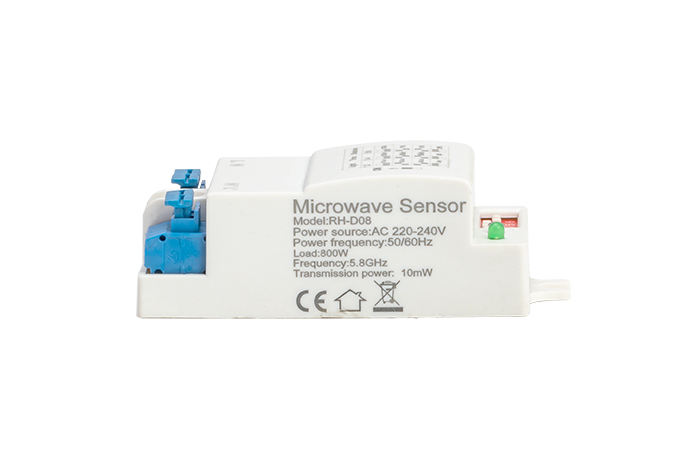
Microwave motion sensors work by emitting high-frequency electromagnetic waves and detecting changes in reflected signals caused by movement.
Compared with PIR sensors, microwave sensors offer greater sensitivity and a wider detection range.
Typical applications:
- Warehouses and factories
- Parking garages
- Outdoor and semi-outdoor LED lighting
Key advantages:
- Long detection range
- Can detect motion through non-metallic materials such as plastic or glass
- Reliable performance in cold or harsh environments
Limitations:
- Higher cost compared to PIR sensors
- Requires careful parameter tuning to avoid false triggering
3. Dual-Technology Motion Sensors (PIR + Microwave)

Dual-technology motion sensors combine PIR and microwave sensing technologies to improve detection accuracy and reduce false triggers.
These sensors typically require both detection methods to confirm movement before activating the lighting.
Typical applications:
- High-end commercial lighting projects
- Smart lighting systems
- Areas with complex environmental conditions
Key advantages:
- Improved reliability
- Lower false detection rate
- Flexible configuration options
4. Integrated Sensor Modules for LED Luminaires

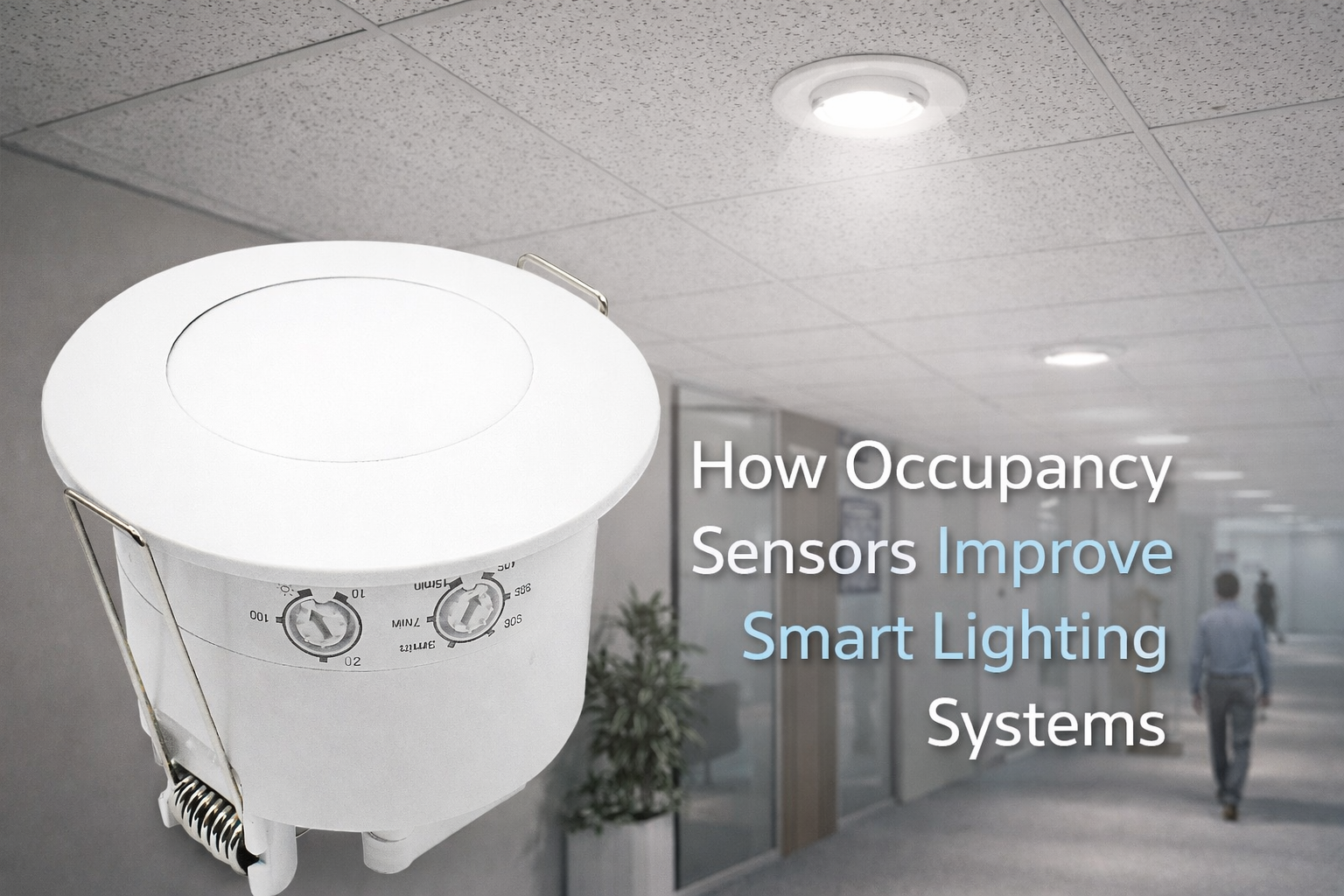
Integrated sensor modules are designed specifically for LED luminaires. They combine multiple sensing and control functions into a compact module.
These modules may include:
- Motion detection
- Daylight sensing
- Dimming or control outputs (On/Off, 0–10V, DALI)
Typical applications:
- Smart LED luminaires
- Office and commercial lighting systems
- OEM lighting fixture designs
How to Choose the Right Motion Sensor for LED Lighting
When selecting a motion sensor for LED lighting, consider the following factors:
- Installation environment (indoor, outdoor, or semi-outdoor)
- Required detection range and sensitivity
- Control method (on/off, dimming, smart control)
- Budget and system complexity
Choosing the appropriate motion sensor ensures reliable operation, optimal energy savings, and long-term system stability.
Understanding the different types of motion sensors used in LED lighting helps designers, engineers, and buyers make informed decisions for their projects. Each sensor technology offers unique benefits, and the best choice depends on application-specific requirements.