Warehouse lighting is a critical part of industrial and commercial facilities, not just for visibility, but also for safety, productivity, and energy efficiency.
In this article, we provide a clear and practical answer based on real-world lighting requirements, sensor technologies, and installation scenarios.
Understanding Warehouse Lighting Needs
Warehouses present unique challenges for motion sensors:
✔ High ceilings
✔ Large open areas
✔ Variable occupancy patterns
✔ Heavy vehicle movement (e.g., forklifts)
✔ Cold or dusty environments
Because of these conditions, ordinary indoor motion sensors often underperform in warehouses. The best solution must offer:
- Long detection range
- High sensitivity and stability
- Low false triggering
- Resistance to environmental factors
Common Motion Sensor Technologies
1. PIR (Passive Infrared) Motion Sensors
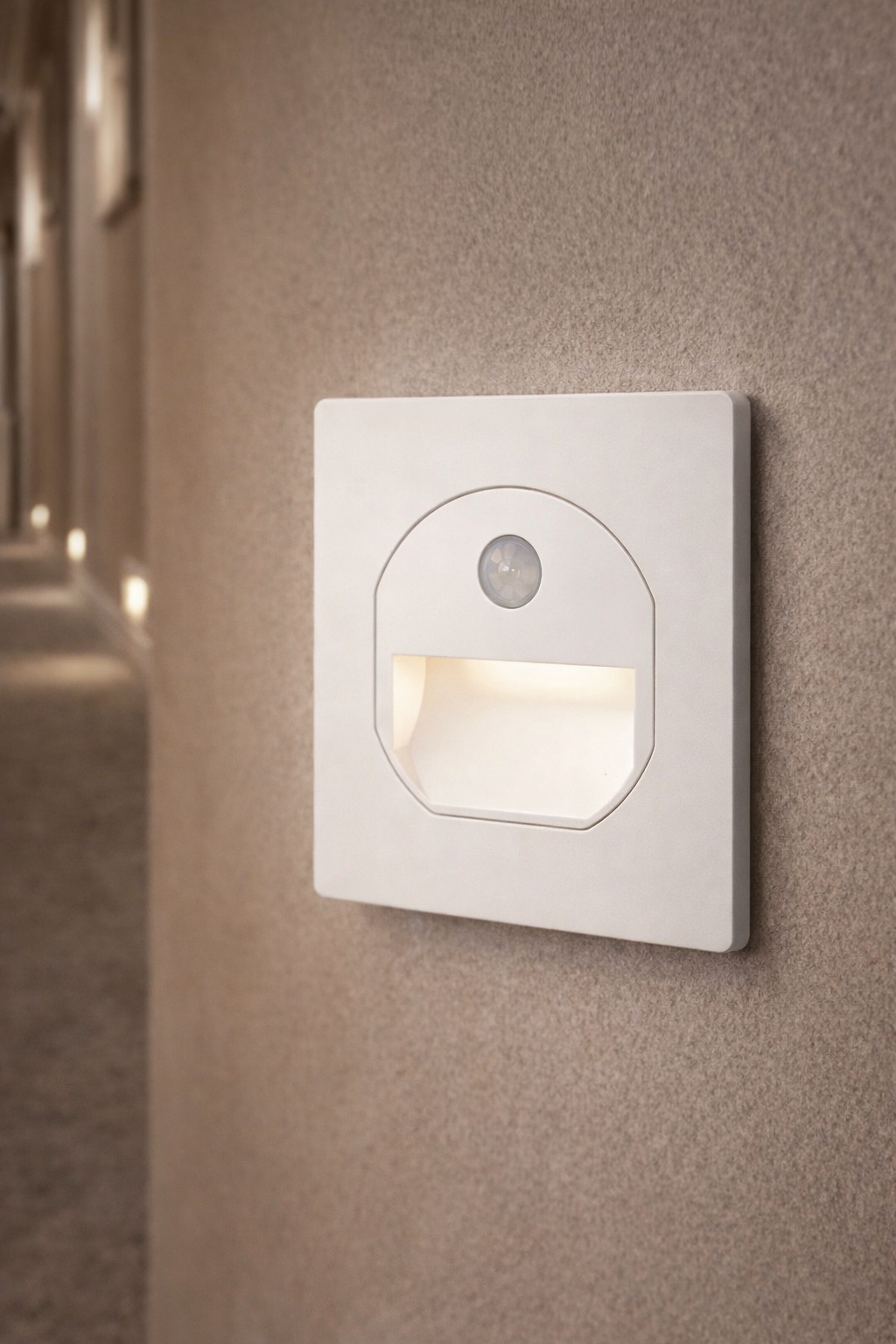
PIR sensors detect infrared heat emitted by moving objects.
They are widely used indoors, but for warehouse applications:
Pros
- Low cost
- Simple installation
- Good for small zones
Cons
- Limited detection range (usually < 10 m)
- Affected by high ceilings and ambient temperature
- Not ideal for large open spaces
Useful for low-traffic or enclosed areas (e.g., small storerooms), but not ideal as the main sensor for large warehouse aisles.
2. Microwave Motion Sensors
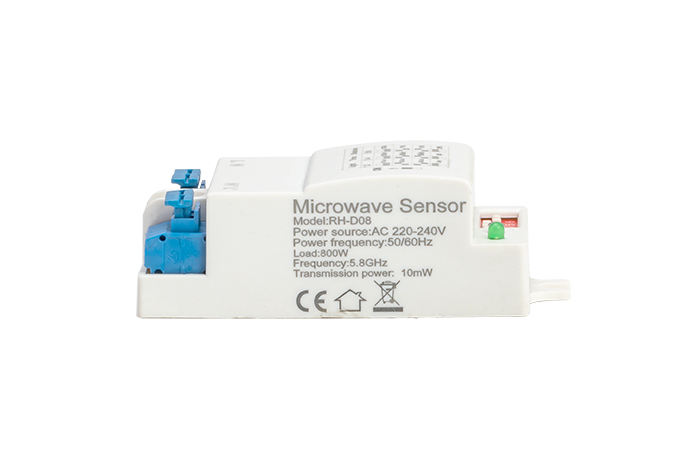
Microwave sensors emit radar signals and detect movement by analyzing reflections.
Pros
- Long detection range
- Works in extreme temperatures
- Detects motion through non-metallic materials
- Excellent in large open spaces
Cons
- Higher cost than PIR
- Needs sensitivity tuning to avoid false triggers
Microwave sensors are very effective for warehouse lighting, especially for high ceilings and large open areas.
3. Dual-Technology Sensors (PIR + Microwave)
Dual-technology sensors combine both PIR and microwave detection to confirm motion.
Why this matters in warehouses:
- Microwave may detect large movement (e.g., forklift)
- PIR confirms human presence
- Reduces false triggers from machinery or airflow
Pros
- Highest reliability
- Stable detection performance
- Suitable for complex environments
- Reduces energy waste due to false activations
Cons
- Higher cost than single-technology sensors
Dual-technology sensors are the best choice for warehouse lighting where accuracy and reliability matter most.
Best Motion Sensor Choices by Warehouse Zone
| Zone Type | Recommended Sensor Type | Why |
|---|---|---|
| High-bay aisles | Microwave / Dual | Long-range detection, less blind zones |
| Storage racks | Microwave | Detects from distance |
| Forklift areas | Dual | Reduces false triggers |
| Offices / meeting spaces inside warehouse | PIR / Dual | Cost-effective yet accurate |
What to Look for in Warehouse Motion Sensors
When choosing motion sensors for warehouses, make sure they offer:
✔ Long Detection Distance
50 ft (15 m) or more for high-bay lighting
✔ Wide Detection Angle
To reduce dead zones between aisles
✔ Adjustable Sensitivity
Helps eliminate false triggers from moving equipment
✔ High IP Rating
Dust and water resistance (e.g., IP54 or higher)
✔ Compatibility with LED Drivers
Supports automatic ON/OFF and dimming control
Energy and Safety Benefits
Using the right motion sensor for warehouse lighting delivers:
- Significant energy savings
- Longer LED lifespan
- Improved safety and visibility
- Automated lighting based on real usage patterns
In many industrial projects, motion-controlled lighting can cut energy costs by 30–70% compared to manual switching or constant ON lighting.
Final Recommendation
👉 Best All-Around Motion Sensor for Warehouse Lighting: Dual-Technology (PIR + Microwave)
If budget is limited, microwave-only can still perform very well, especially in open high-bay spaces.
PIR-only sensors are best reserved for small enclosed zones or offices within the warehouse.
Frequently Asked Questions
Q: Can PIR sensors work on 20ft ceilings?
Not effectively; PIR detection weakens with height. Microwave or dual sensors are recommended.
Q: Do motion sensors interfere with forklifts or machines?
Quality dual-technology sensors can minimize false triggers from machinery movement.
Q: Are motion sensors compatible with smart lighting systems?
Yes — many support dimming control, daylight harvesting, and automation software.